








Choosing Bar Stools for Kitchens, Islands and Breakfast Bars
Bar stools for kitchen use need to work hard. For a kitchen island, look for stools that tuck neatly underneath when not in use — most need around 25–30 cm of clearance between the seat and the underside of the counter.
If your counter height varies, or if multiple people of different heights will be using the same seating, adjustable bar stools give you more flexibility without compromising on style.
Quick Sizing Guide
Measure from the floor to the underside of your counter, then subtract 25–30 cm — that's your ideal seat height.
- Counter height stools (seat height 60–65 cm) — suit surfaces of 85–95 cm, covering most standard kitchen counters and breakfast bars
- Bar height stools (seat height 70–75 cm) — designed for taller surfaces of 100–110 cm, such as raised islands or home bars
- Adjustable gas-lift stools — remove the guesswork entirely and suit a range of counter heights
How Many Stools Do You Need?
Allow around 55–60 cm of counter width per stool so each person has comfortable elbow room.
- 120 cm island — comfortably seats 2
- 180 cm island — comfortably seats 3
- Longer bars — divide the usable length by 60 cm as a starting point
Always account for any corners, sockets, or obstructions along the counter edge before deciding on quantity.
Comfort Considerations
- Footrest — reduces leg pressure during longer sitting and makes the stool easier to get on and off
- Padded seat — noticeably more comfortable than hard wood or metal for mealtimes
- Seat width — aim for at least 35–40 cm for comfortable adult seating
- Children — consider a lower seat height or a stool with a back for added safety
Adjustable, Swivel, Backless and Bar Stools with Backs
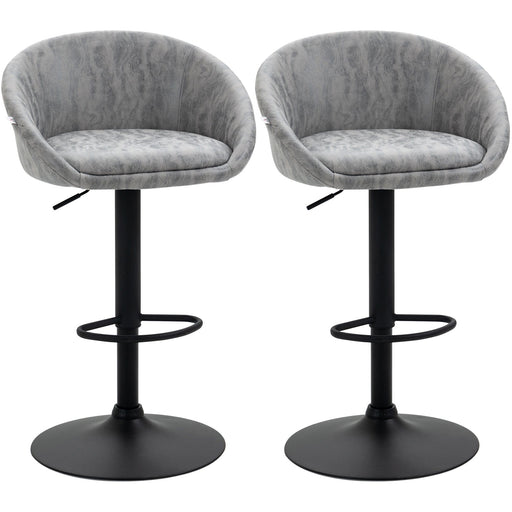
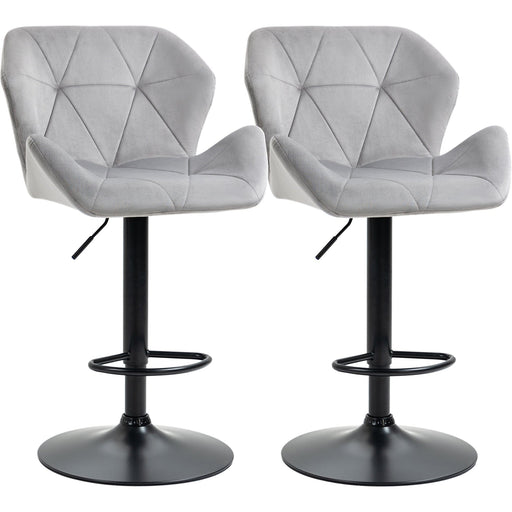
- Adjustable bar stools — gas-lift mechanism, ideal for multi-use spaces or mixed-height households
- Swivel bar stools — rotate 360°, easier to get on and off, great for open-plan kitchens
- Bar stools with backs — more support for longer sitting, mealtimes, or working at a counter
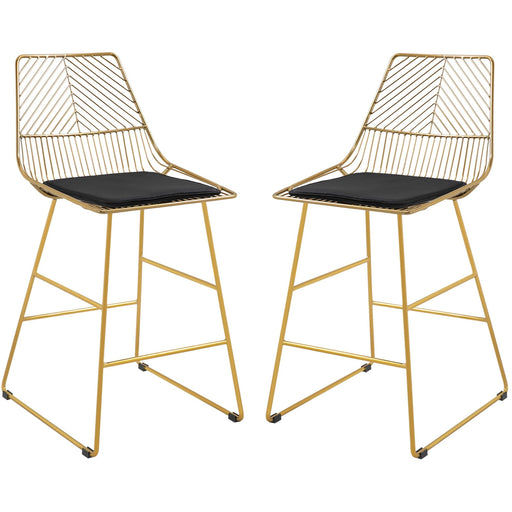
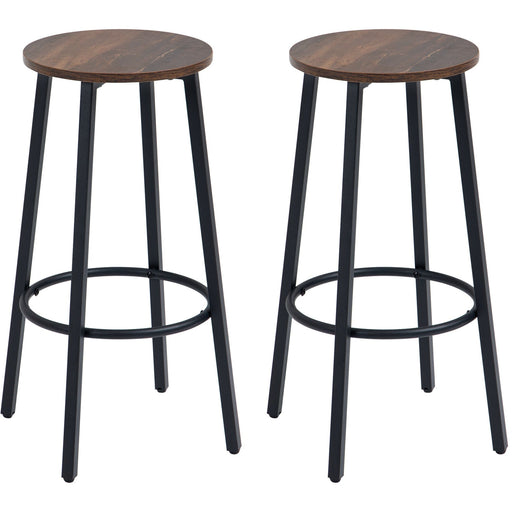
- Backless bar stools — cleaner minimal look, tuck away more easily when not in use
Styles, Materials and Care
- Modern — clean lines and neutral tones, ideal for contemporary open-plan kitchens
- Industrial — metal frames with wood or upholstered seats, suits darker or more raw interiors
- Velvet — adds luxury for home bars and dining areas; requires more care in high-traffic kitchens
- Faux-leather / wipe-clean fabric — most practical for busy households; a damp cloth handles most spills
- Powder-coated metal frames — scratch-resistant and easy to maintain
- Solid wood frames — benefit from occasional treatment if placed near a sink or in a humid kitchen
Delivery and Assembly
Most bar stools are delivered flat-packed and take around 10–20 minutes to assemble per stool — typically just attaching the legs to the seat using the tools provided. Adjustable gas-lift stools may have a few more steps but are still straightforward without specialist tools.
Orders are dispatched from UK warehouses, with most in-stock items arriving within 2–5 working days. Full assembly instructions are included with every order.
Matching Your Stools to Your Kitchen
For a cohesive look, match the stool finish to your existing kitchen hardware — brushed brass stools pair well with gold-toned taps and handles; matte black frames suit darker cabinetry and industrial fittings; chrome or brushed steel works with most modern kitchens.
If your kitchen has warm wood tones, natural oak or walnut-effect seats will tie the space together. For a more eclectic look, a contrasting finish — such as a velvet seat against a metal frame — can work as a deliberate style statement.
Weight Capacity
Most bar stools in this range are rated to support 100–120 kg per seat. If you need a higher weight capacity, check the individual product specification before purchasing — this is listed on each product page.
Stability on Different Floor Types
If you have hard floors — tiles, wood, or laminate — look for stools with rubber or felt feet to prevent scratching and reduce noise when moving the stool. Many models include protective feet as standard; if not, adhesive felt pads are an inexpensive addition.
For uneven tiled floors, stools with adjustable levelling feet will sit more securely and won't rock in use — worth checking the product spec if your kitchen floor has grout lines or slight variation in level.
Need More Help Choosing?
Read our in-depth Bar Stool Buying Guide — covering everything from measuring your counter to choosing the right style for your interior.